Signal or Noise
Fast rounds where the room decides whether a piece of data actually predicts anything, or is just noise.
What it is
A clue appears. Fifteen seconds to call it.
- Satellite images show a factory car park is fuller than usual. A celebrity tweeted a snack brand once.
- Three buttons: RISE, FALL, or NOISE.
- Faster correct answers score more.
- After each round the real answer appears with a one-line explanation.
Why it works
It builds the habit of asking whether something actually tells you anything.
- That is the skill underneath data handling, media literacy and half of economics.
- The fifteen-second timer stops overthinking.
- The explanation after each round means nobody guesses blindly for long.
Every screen you will touch, in order.
Real screenshots of the real thing. Swipe, or use the arrows. Nothing here is a mock-up.
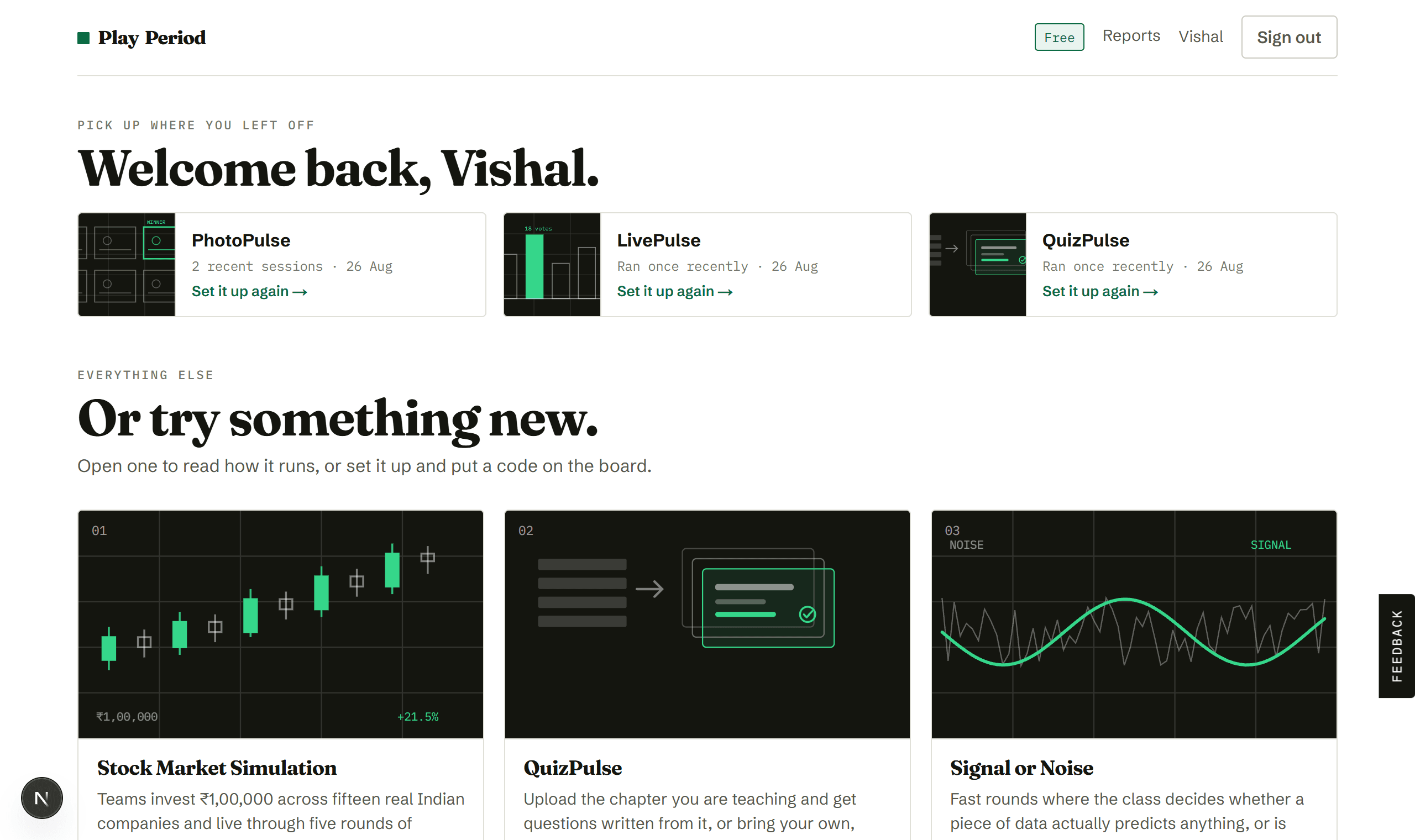
Pick an activity
Your library. Open any tile to read how it runs before committing to it.
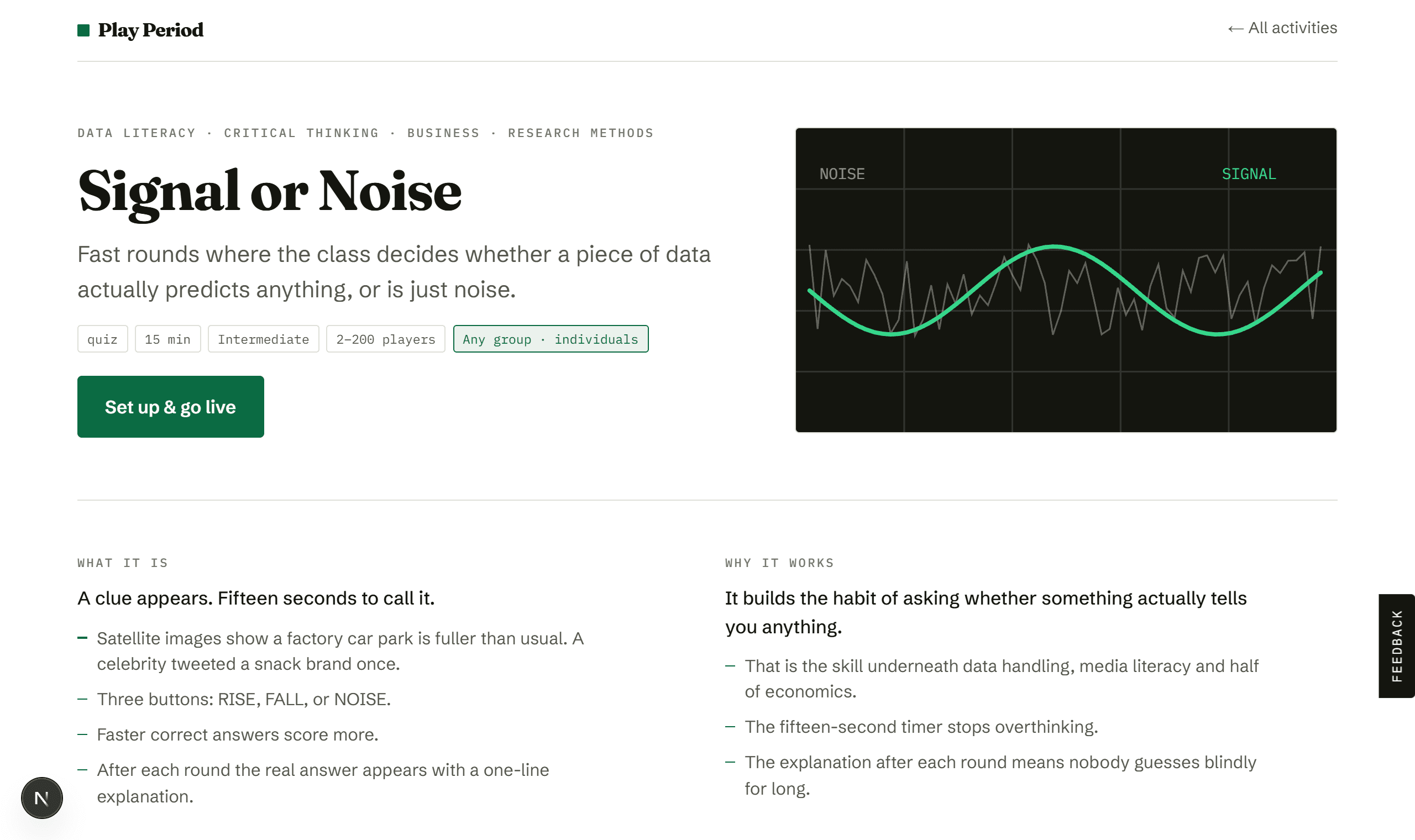
Read the run of play
What happens, in order, with timings. Nothing is live yet. This page is just for you.
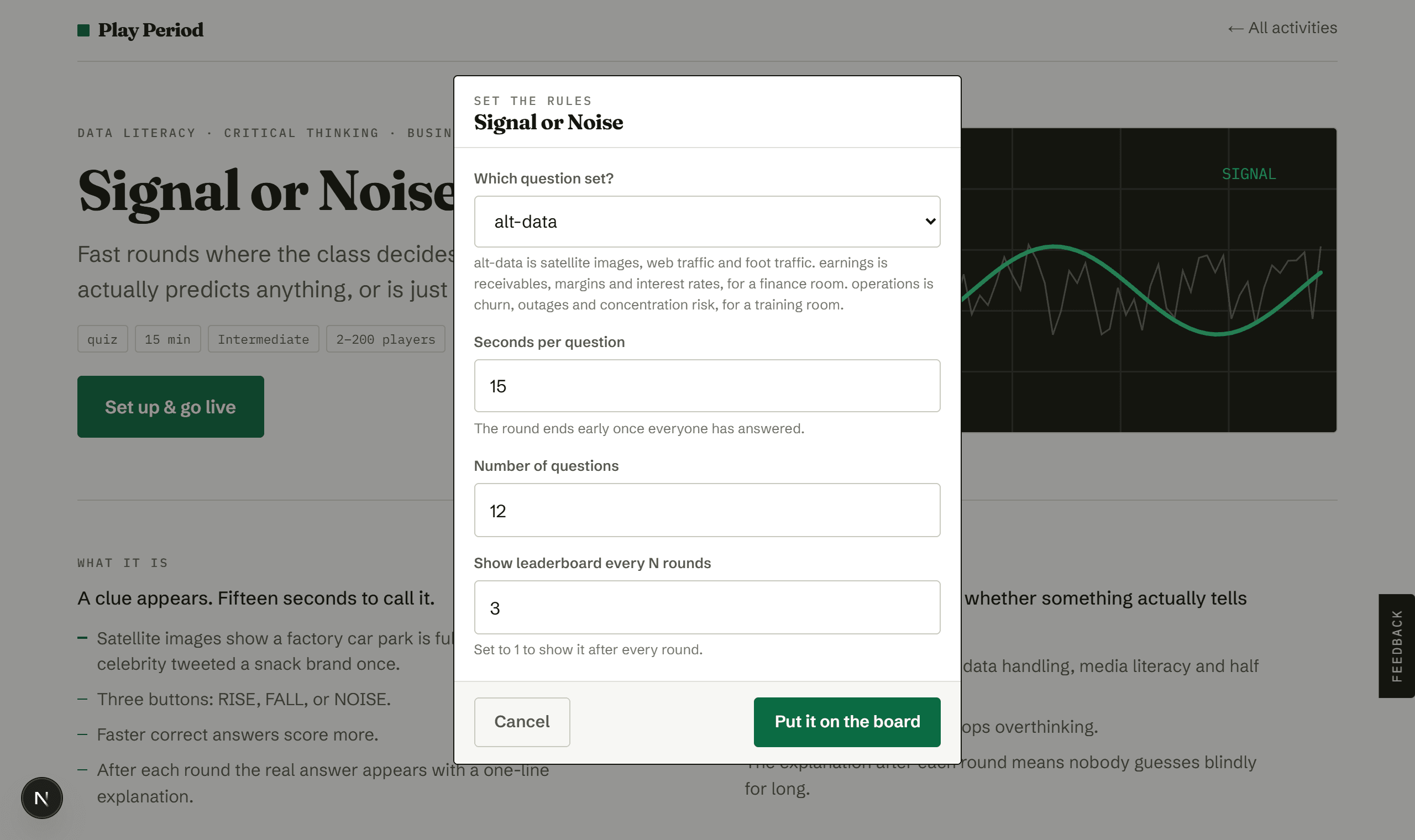
Set the rules
Seconds per question, how many questions, how often standings show. Defaults are sensible, so you can just press go.
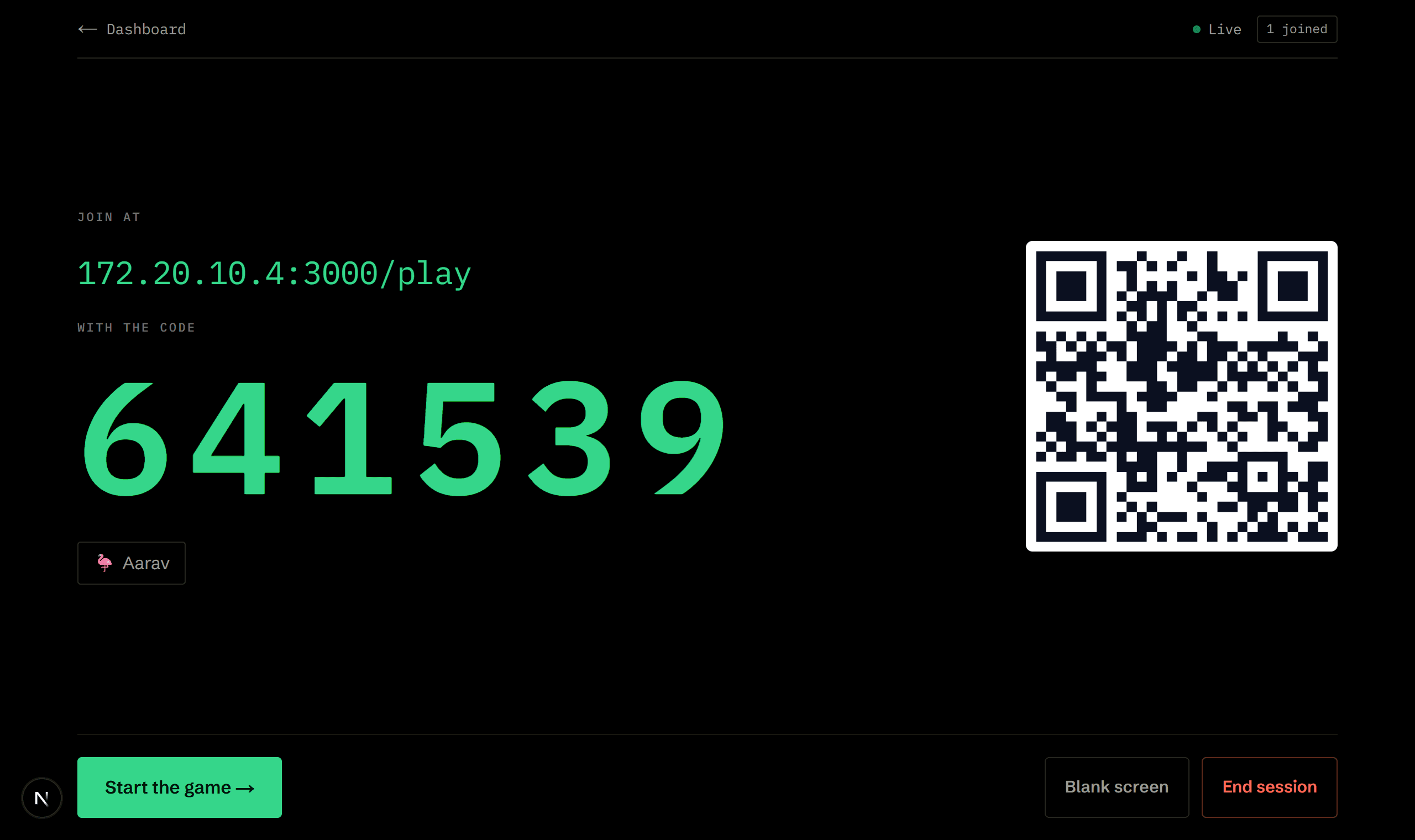
Put the code on the board
A six-digit code and a QR go up. Names appear as people join. Nothing starts until you press start.

They join in seconds
Scan or type the code, pick a name, done. No account, no app, no email address.
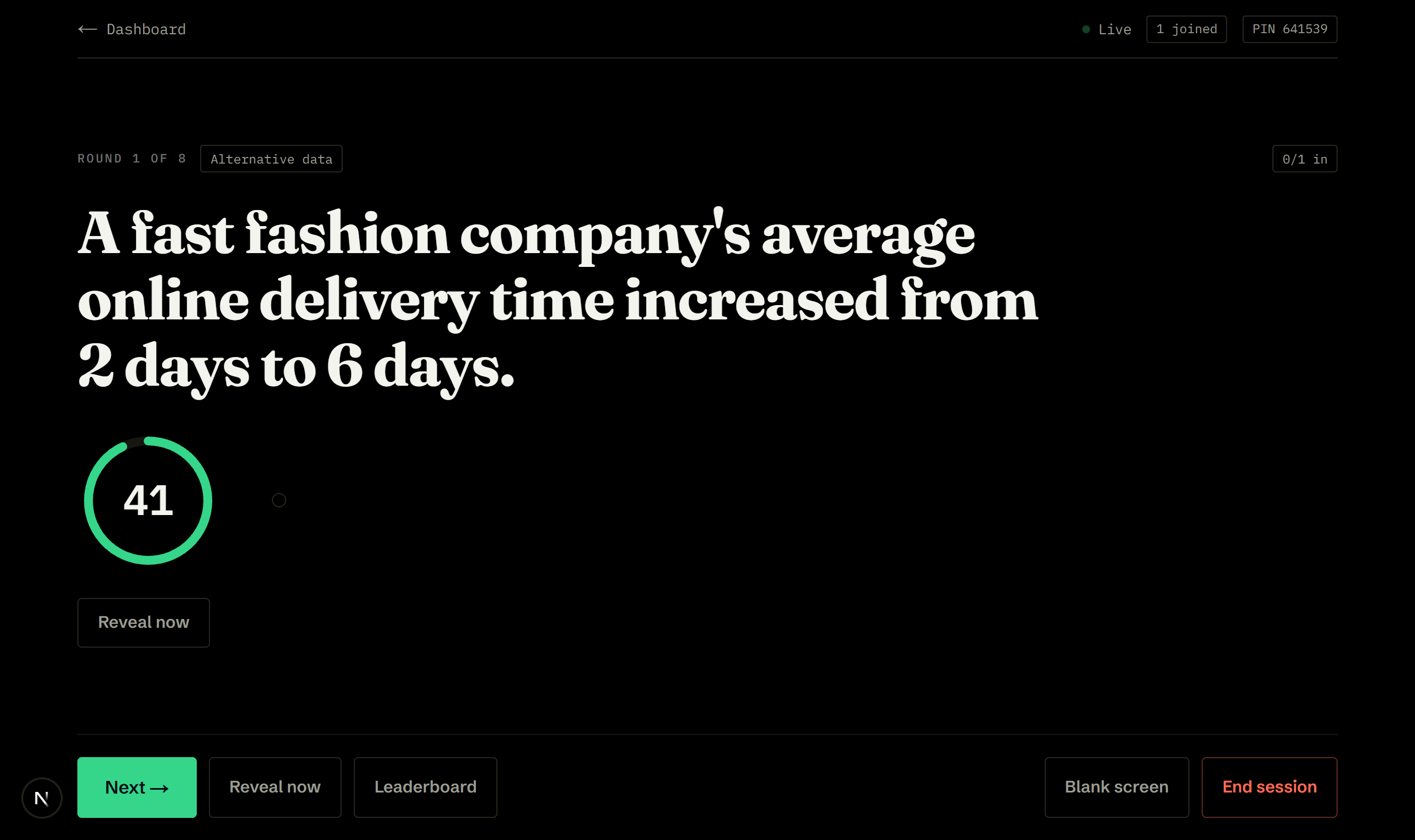
Run a round
The clue goes up with a countdown. You can see how many have answered without seeing who.
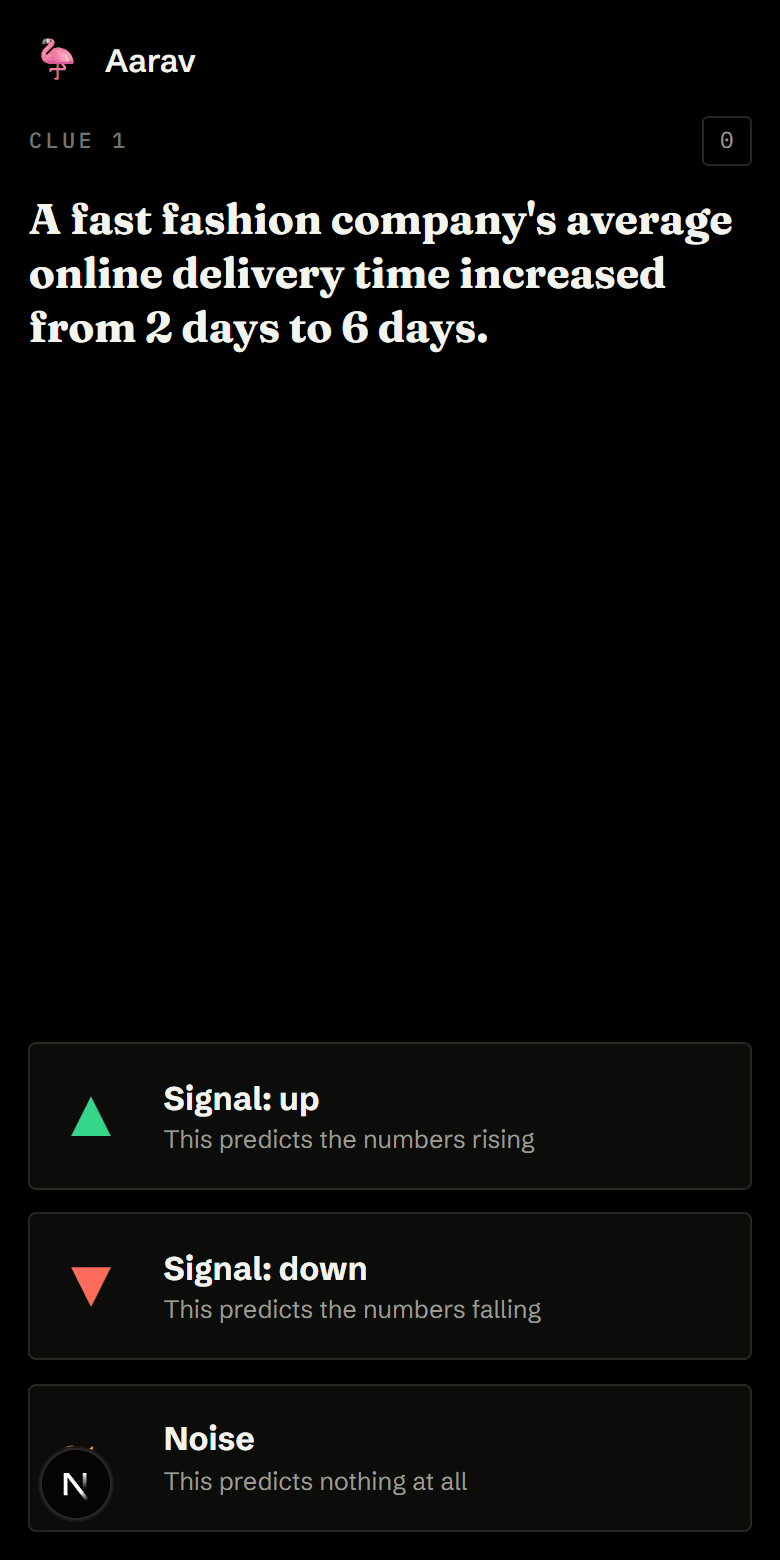
One decision, three buttons
That is the whole phone screen. Big targets, no scrolling, locks the moment they commit.
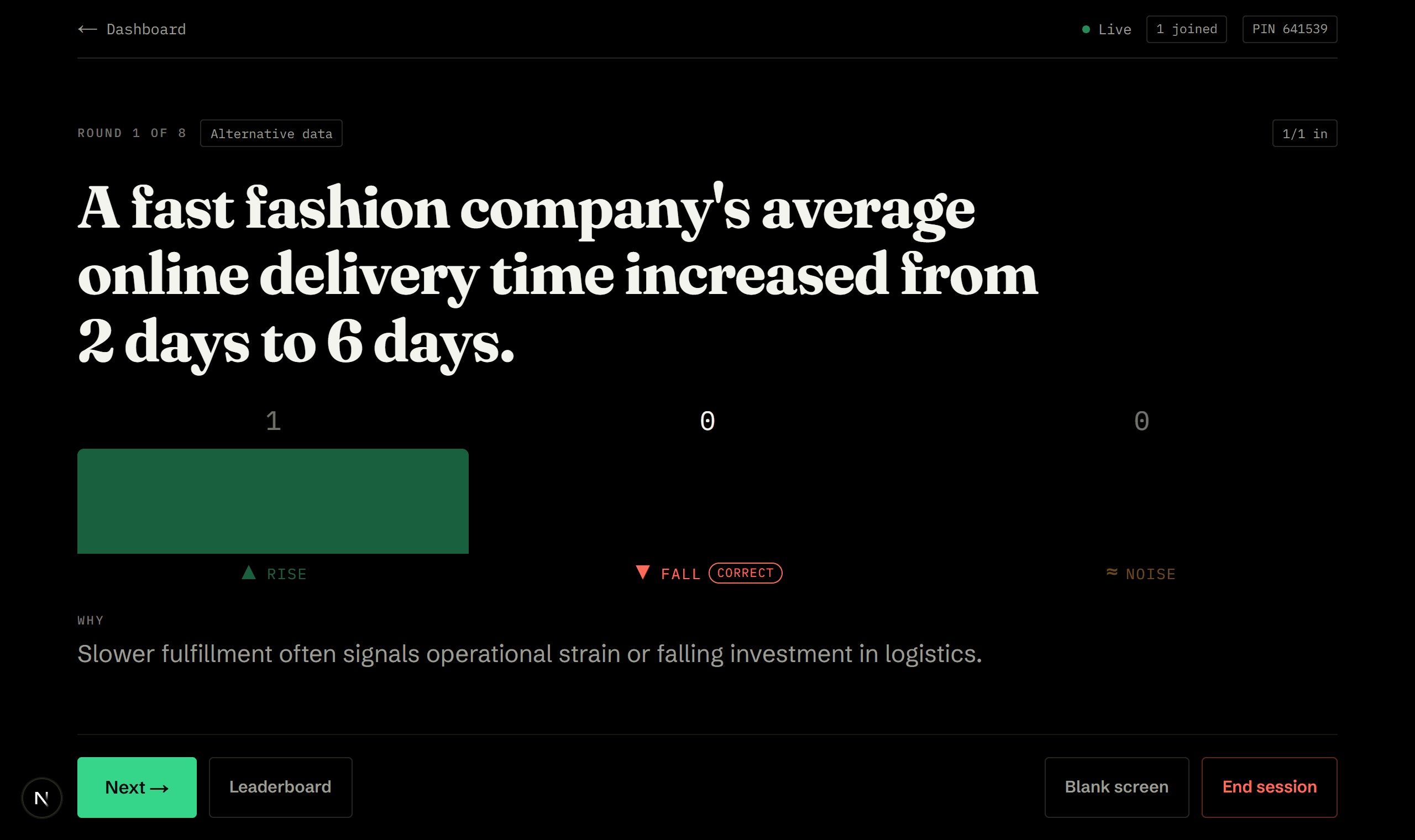
Reveal and discuss
The answer, how the room split, and why. The rounds where the room splits evenly are the ones worth pausing on.
How a session goes.
- Join1 min
Everyone scans the code and picks a nickname. Names appear on the board as they arrive.
- Round15 sec
A clue appears. Fifteen seconds. Everyone answers on their phone.
- Reveal30 sec
The correct answer, the room’s split across the three options, and why it moved.
- Standings20 sec
Leaderboard every third round by default, and you choose how often.
- Report2 min
Which clues the room got wrong, ranked, ready to reteach from.
The board shows one thing. Their phone shows another.
- The clue, large, with a countdown bar
- How many have answered, live
- After reveal: the room’s split across RISE / FALL / NOISE
- The explanation, written to be read aloud
- The clue and three large buttons
- A lock as soon as they commit, so no changing their mind
- Whether they were right and how many points they earned
- Their streak and rank
What we would tell you over tea.
- The rounds where the room splits evenly are the ones worth pausing on.
- Fifteen seconds feels short and should. Lengthen it only for younger classes.
- Run it as a warm-up before the Stock Market Simulation, since the two teach the same instinct.
Ready when you are.
Making an account takes a minute, and the whole library opens with it.